


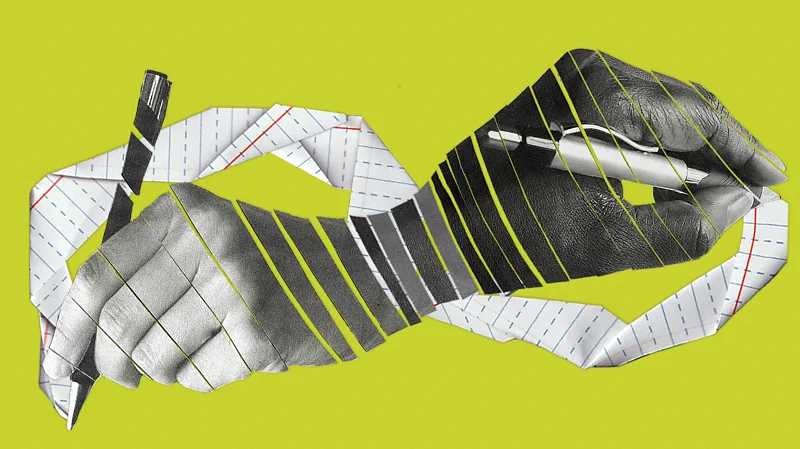
“It’s the devil’s hand”: The new movie that has gotten a lot of praise for looking at superstitions surrounding left-handed persons
Left-handedness is frequently regarded as “wrong” as well as a sign of “genius”. Shih-Ching Tsou’s drama, Left-Handed Girl, is based on the prejudice she encountered being a lefty in Taiwan.
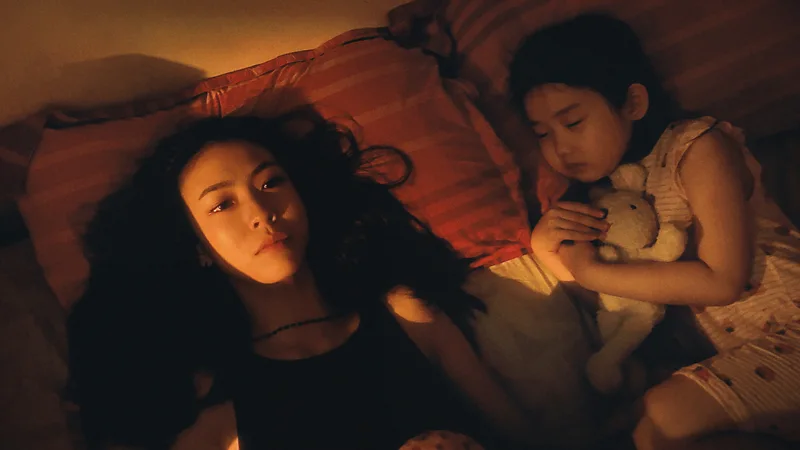
In the acclaimed new film Left-Handed Girl, a five-year-old Taiwanese girl named I-Jing is punished by her grandfather for sketching with her left hand. He claims it’s “the devil’s hand”. Later, when her mother and older sister work long hours, I-Jing steals from market stalls near the family’s small apartment, blaming her actions on her “wicked” left hand. Many people, it appears, believe that being left-handed is not quite right.
Around one in ten people are thought to be naturally left-handed, but for centuries it was seen as inherently wrong, even evil: both the Bible and the Quran contain negative passages about the left-hand side; the Latin word for left is “sinister”; and even when no longer associated with witchcraft, it was seen as something that needed “correction”.
However, in recent decades, left-handers have gained popularity in the West, with many claiming that they are more creative, if not brilliant, than their right-handed counterparts. There is an International Left-Handers Day, and notable left-handers include Sir Paul McCartney, Leonardo da Vinci, Prince William, former US President Barack Obama, and Lady Gaga. Left-handers may continue to live in a right-handed world, but in some situations, they (or we) may feel like a skilled minority.
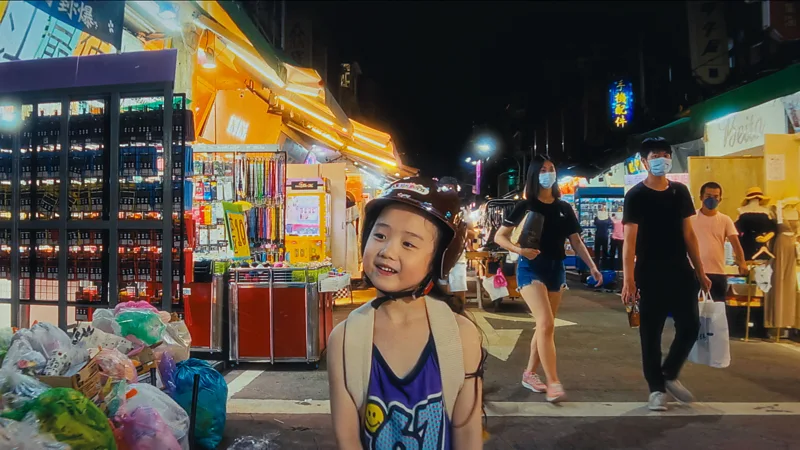
Shih-Ching Tsou, the director and co-writer of Left-Handed Girl, is living in New York, but her film (her solo directing debut) is a funny and poignant study of not only being left-handed, but also her native Taiwan. She has also produced some of Oscar winner Sean Baker’s most well-known films, such as Tangerine, Red Rocket, and The Florida Project; Baker co-wrote and edited Left-Handed Girl.
She tells the BBC that the film, which has been picked for the Cannes Film Festival and Taiwan’s 2026 Oscar entry in the best international feature category, is based on her own childhood experiences. Growing Born in Taiwan, she was naturally left-handed, but as an infant, she was encouraged to use her right hand. She now says she only uses her left hand to hold a knife or scissors.
When you’re a little child growing up, you’re instructed not to be different, and that really impacts you. Shih-Ching Tsou
“I was born left-handed and this film started from something my grandfather told me when I was in high school,” adds the actress. “He told me that the left hand is ‘the devil’s hand’ and advised me not to use it, despite the fact that I was no longer left-handed. When I met Sean at an editing workshop in the United States in 1999, I told him what my grandfather had said, and he felt it was a great story idea because of the concept of a taboo. We even traveled to Taiwan in 2001 to shoot some footage and create a teaser, but we lacked the finances to make a film at the time.”
Tsou goes on to say that I-Jing’s left-handedness serves as a metaphor for the film’s underlying theme: Taiwanese conformity and the pressure, particularly on women, to behave in a specific manner in a patriarchal culture.
“For years before I made this, I kept telling Sean that I wanted to tell a tale about women. I was raised in Taiwan with a lot of expectations and constraints placed on girls. You have to be a certain way, blend in, and not stand out. Growing up, especially as a young child, you are constantly urged not to be different, which has a significant impact on you. This isn’t just about being left-handed; it’s about how you can’t be yourself.
Casting a Left-handed Actor
In 2023, Taiwan still maintained one of the lowest documented rates of left-handedness in the world, at under 5%. Nearby China had the lowest rate, at 2.64%. In comparison, approximately 13% of persons in the Netherlands are said to be left-handed, whereas the global average is 10.6%.
Tsou claims that children in Taiwan are still taught to use their right hand instead of their left, particularly by persons of older generations.
“Before I made this film in Taiwan, a lot of people told me, ‘Oh, your story is so old because the left-handed taboo doesn’t exist anymore’,” according to her. “But I told them, ‘Well, it’s my story, and I’ll tell it.'” When I cast Nina Ye [the young actor who plays I-Jing] in 2022, she was six years old, and her mother informed me on the first day that Nina was naturally left-handed but had previously been ‘fixed’ by her grandmother, who didn’t like the concept. So, while Nina was on set, we had to retrain her to use her left hand for tasks such as painting and throwing balls. We had to constantly check to see if she was using the correct hand for each scene.”
The perception that the left is somehow “wrong” persists in Chinese and Taiwanese culture. According to a 2013 study conducted by Howard Kushner, Emeritus Professor of Science and Study at Emory University in the United States, the Mandarin character for “left” might be rendered as “weird”, “different”, “incorrect”, “contrary”, or “opposite”. Many Asian (and African) civilizations have historically eaten with the right hand and used the left hand only when something was unclean. Kushner explains that the Mandarin character for “right” signifies “to eat with the right hand”.
“Culturally, if you have a whole society that you’re trying to modernise relatively quickly, you won’t like around 10% of them needing to use the other hand in a big industrial setting, or a factory, or indeed a school,” he points out. “There is no benefit to it. And if you’re using a scythe in an agricultural context before automation, would you want to be standing in a line with someone next to you carrying their scythe in the opposite hand?”
Kushner adds that, traditionally, left-handers had a significant edge in the military because, in hand-to-hand combat, right-handed soldiers were less comfortable with their assault patterns. Left-handed athletes, such as tennis champions Martina Navratilova and John McEnroe and boxer Manny Pacquiao, can now take advantage of surprise against (mostly) right-handed opponents.
Another tennis star, Rafael Nadal, is normally right-handed but holds the racquet with his left hand. According to Kushner, “left-handers can sometimes have a great advantage, and up until recently Chinese players were denied that” in table tennis or ping pong, which is considered China’s national ball game.
The present reported rates of left-handedness in various parts of Asia are equivalent to those in Victorian Britain around 1900. According to Chris McManus, Emeritus Professor of Psychology at UCL London and author of the book Left Hand, Right Hand, the prevalence of left-handedness among people born in 1900 fell to 3% as a result of industrialisation. “No one was going to make a Spinning Jenny or other pieces of machinery for left-handers,” the engineer tells the BBC.