Aperture is one of the most important camera settings to understand when learning photography. It affects how much light enters your camera and plays a major role in determining how much of your photograph appears sharp.
Understanding aperture can help you take better portraits, landscapes, indoor photographs, and many other types of images.
What Is Aperture?
Aperture Controls the Lens Opening
Aperture refers to the opening inside a camera lens that allows light to pass through to the camera’s sensor.
Think of it like the pupil of your eye. In bright conditions, your pupil becomes smaller to reduce the amount of light entering your eye. In darker conditions, it becomes larger to allow more light in.
A camera lens works in a similar way.
Aperture Is Measured in F-Stops
Aperture is represented using f-numbers such as:
- f/1.4
- f/1.8
- f/2.8
- f/4
- f/5.6
- f/8
- f/11
- f/16
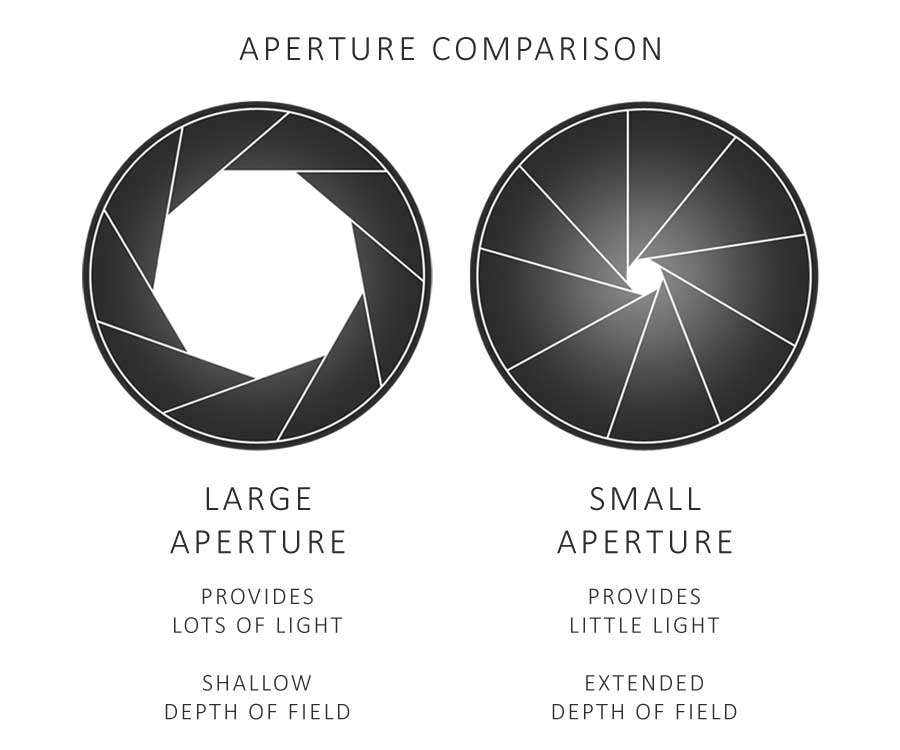
One important thing that confuses beginners is that a smaller f-number means a wider aperture, while a larger f-number means a narrower aperture.
For example, f/1.8 is a wider aperture than f/8.
How Aperture Affects Exposure
Wider Apertures Let in More Light
When you select a wider aperture such as f/1.8, the lens opening becomes larger and allows more light to reach the sensor.
This can be useful when photographing in low-light conditions or when you want to use a faster shutter speed.
Narrower Apertures Let in Less Light
An aperture such as f/8 or f/11 creates a smaller opening.
Less light reaches the sensor, so you may need to compensate using your shutter speed or ISO.
Aperture and Background Blur
Wide Apertures Create More Background Blur
One of the reasons photographers love wide apertures is their ability to create a shallow depth of field.
For example, shooting a portrait at f/1.8 can produce a sharp subject with a noticeably blurred background.
This can help separate the person from their surroundings.
Background Blur Depends on More Than Aperture
Aperture is important, but it isn’t the only factor that affects background blur.
The distance between your subject and the background, your distance from the subject, and the focal length of your lens can also influence the appearance of the background.
Aperture for Portrait Photography
Use a Wider Aperture for Subject Separation
Portrait photographers often use apertures such as f/1.8, f/2, f/2.8, or similar settings when they want a blurred background.
The exact aperture depends on the lens and the look you want.
Be Careful With Extremely Wide Apertures
A very wide aperture can create an extremely shallow depth of field.
If you are photographing a person’s face at a very wide aperture, one eye may be sharp while the other becomes noticeably softer if the subject is angled relative to the camera.
For groups, you may need a narrower aperture to keep more people in focus.
Aperture for Landscape Photography
Narrower Apertures Can Keep More of the Scene Sharp
Landscape photographers often want both foreground and background elements to appear reasonably sharp.
Settings such as f/8 or f/11 are commonly useful starting points, although the ideal aperture depends on the scene and lens.
Don’t Automatically Choose the Smallest Aperture
A common beginner mistake is assuming that f/16 or f/22 will always produce the sharpest image.
Very narrow apertures can introduce an optical effect called diffraction, which can reduce overall sharpness.
Instead of automatically selecting the smallest aperture available, choose the setting that provides the depth of field you actually need.
Aperture and Low-Light Photography
Wider Apertures Can Help in Dark Conditions
When shooting indoors or in other low-light situations, opening the aperture can allow more light into the camera.
For example, changing from f/5.6 to f/2.8 allows significantly more light to reach the sensor.
This can help you maintain a faster shutter speed and reduce motion blur.
Consider the Depth of Field
Although a wide aperture can help with exposure, it also reduces depth of field.
Make sure the parts of your subject that need to be sharp remain within the focus area.
Aperture and Shutter Speed
Aperture Is Part of the Exposure Triangle
Aperture works together with shutter speed and ISO to determine exposure.
Changing one setting can affect the others.
For example, if you open your aperture to let in more light, you may be able to use a faster shutter speed or a lower ISO.
Learn to Balance the Settings
There isn’t one perfect aperture for every photograph.
The right choice depends on what you are photographing, the available light, and the visual effect you want.
Aperture and ISO
A Wider Aperture Can Reduce the Need for High ISO
Opening your aperture allows more light into the camera.
In some situations, this means you can keep your ISO lower than you otherwise would.
Lower ISO can help reduce digital noise, although modern cameras can perform well at higher ISO settings too.
Don’t Sacrifice the Image You Want
If you need a deeper depth of field, you may have to use a narrower aperture and compensate with ISO or shutter speed.
Photography is often about balancing these settings rather than trying to keep one setting as low or high as possible.
Understanding Depth of Field
What Is Depth of Field?
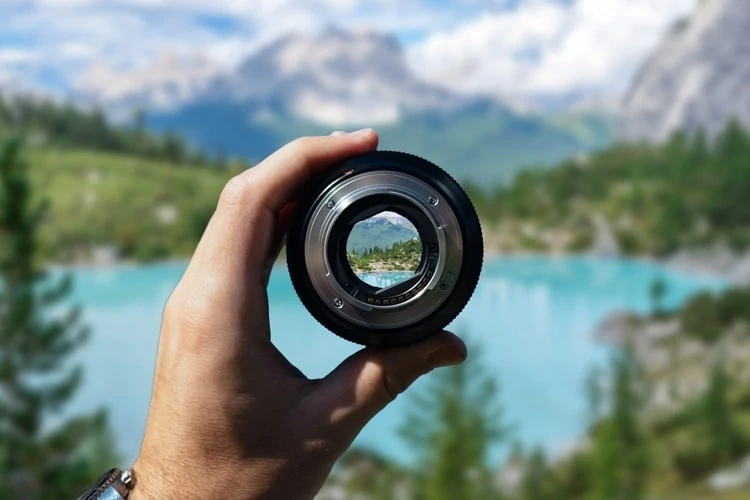
Depth of field refers to the area of a photograph that appears acceptably sharp.
A shallow depth of field means a smaller area is in focus, while a deeper depth of field means more of the scene appears sharp.
Aperture Changes Depth of Field
A wider aperture generally produces a shallower depth of field.
A narrower aperture generally produces a deeper depth of field.
This is why aperture is both an exposure setting and a creative tool.
Common Aperture Mistakes Beginners Make
Thinking f/1.8 Is Always Better
A wide aperture can create beautiful background separation, but it isn’t automatically the best choice.
Some photographs require more depth of field. A landscape, group portrait, or product photograph may benefit from a narrower aperture.
Forgetting to Check Focus
When using a wide aperture, focusing becomes more critical because the depth of field can be very shallow.
For portraits, make sure your focus is on the intended part of the subject, particularly the eyes.
Choosing Aperture Without Considering the Story
Don’t choose an aperture simply because a particular setting is popular.
Think about what you want the viewer to see. If the background is important to the story, you may want more of it in focus. If your goal is to isolate the subject, a wider aperture may be more appropriate.
Simple Aperture Examples
Portrait Example
Imagine photographing one person outdoors.
Using f/2 can create strong separation between the subject and background.
Using f/8 will generally keep more of the environment recognizable.
Neither option is automatically better. They simply create different results.
Landscape Example
If you are photographing a landscape and want foreground, middle-ground, and background elements to remain sharp, you might start around f/8 and adjust based on the scene.
The important thing is to focus on the required depth of field rather than blindly selecting a particular number.
Final Thoughts
Aperture controls the size of the opening in your lens and affects both exposure and depth of field.
Remember the basic rule: smaller f-number = wider aperture and more light, while larger f-number = narrower aperture and less light.
Once you understand this relationship, start experimenting with different aperture settings. Try photographing the same subject at f/1.8, f/4, and f/8 and compare the results.
With practice, you’ll begin to choose aperture based on the look and depth of field you want rather than simply relying on automatic settings.